
Funeral poems for Dad
The right poem for your dad's funeral sounds like him: the steady father who taught you how to live, or the man who was happiest in his garden. Here are ten funeral poems for Dad, each with a note on the kind of father it suits. All of them are out of copyright, so you can read them at the service or print them in the program.
Updated October 17, 2026
Funeral poems for Dad
Each poem is printed as it was published, with a line underneath on where it appeared. Two long ones are given in part, the lines families read. Old spellings like tho' and ev'n are the poets' own.
If
For the steady father who taught you how to live. It is written as advice to a son, and sons often read it.
If you can keep your head when all about you
Are losing theirs and blaming it on you;
If you can trust yourself when all men doubt you,
But make allowance for their doubting too:
If you can wait and not be tired by waiting,
Or being lied about, don't deal in lies,
Or being hated don't give way to hating,
And yet don't look too good, nor talk too wise;If you can dream – and not make dreams your master;
If you can think – and not make thoughts your aim,
If you can meet with Triumph and Disaster
And treat those two impostors just the same:
If you can bear to hear the truth you've spoken
Twisted by knaves to make a trap for fools,
Or watch the things you gave your life to, broken,
And stoop and build 'em up with worn-out tools;If you can make one heap of all your winnings
And risk it on one turn of pitch-and-toss,
And lose, and start again at your beginnings
And never breathe a word about your loss:
If you can force your heart and nerve and sinew
To serve your turn long after they are gone,
And so hold on when there is nothing in you
Except the Will which says to them: 'Hold on!'If you can talk with crowds and keep your virtue,
Or walk with Kings – nor lose the common touch,
If neither foes nor loving friends can hurt you,
If all men count with you, but none too much:
If you can fill the unforgiving minute
With sixty seconds' worth of distance run,
Yours is the Earth and everything that's in it,
And – which is more – you'll be a Man, my son!
A Farewell
For a daughter to read: a man's goodbye to a young girl, with one lesson to keep. It takes about half a minute.
My fairest child, I have no song to give you;
No lark could pipe to skies so dull and grey:
Yet, ere we part, one lesson I can leave you
For every day.Be good, sweet maid, and let who will be clever;
Do noble things, not dream them, all day long:
And so make life, death, and that vast for-ever
One grand, sweet song.
O Captain! My Captain!
Whitman wrote it after Abraham Lincoln was killed, and families read it for a father who led them. The speaker calls the captain "dear father".
O Captain! my Captain! our fearful trip is done,
The ship has weather'd every rack, the prize we sought is won,
The port is near, the bells I hear, the people all exulting,
While follow eyes the steady keel, the vessel grim and daring;
But O heart! heart! heart!
O the bleeding drops of red,
Where on the deck my Captain lies,
Fallen cold and dead.O Captain! my Captain! rise up and hear the bells;
Rise up – for you the flag is flung – for you the bugle trills,
For you bouquets and ribbon'd wreaths – for you the shores a-crowding,
For you they call, the swaying mass, their eager faces turning;
Here Captain! dear father!
This arm beneath your head!
It is some dream that on the deck,
You've fallen cold and dead.My Captain does not answer, his lips are pale and still,
My father does not feel my arm, he has no pulse nor will,
The ship is anchor'd safe and sound, its voyage closed and done,
From fearful trip the victor ship comes in with object won;
Exult O shores, and ring O bells!
But I with mournful tread,
Walk the deck my Captain lies,
Fallen cold and dead.
For the Author's Father
Burns wrote it for his own father, William Burnes, who died in 1784. It suits a tender father who was afraid of nobody.
O ye whose cheek the tear of pity stains,
Draw near with pious rev'rence and attend!
Here lie the loving Husband's dear remains,
The tender Father, and the gen'rous Friend.
The pitying Heart that felt for human Woe;
The dauntless heart that fear'd no human Pride;
The Friend of Man, to vice alone a foe;
'For ev'n his failings lean'd to Virtue's side.'
Invictus
For a father who faced a long illness, or a hard life, without complaint. Henley wrote it in 1875, while he was in hospital.
Out of the night that covers me,
Black as the pit from pole to pole,
I thank whatever gods may be
For my unconquerable soul.In the fell clutch of circumstance
I have not winced nor cried aloud.
Under the bludgeonings of chance
My head is bloody, but unbowed.Beyond this place of wrath and tears
Looms but the Horror of the shade,
And yet the menace of the years
Finds, and shall find me, unafraid.It matters not how strait the gate,
How charged with punishments the scroll,
I am the master of my fate:
I am the captain of my soul.
The Village Blacksmith
For a father who worked with his hands and owed nothing to anyone. The blacksmith in the poem has lost his wife and is bringing up their children.
Under a spreading chestnut tree
The village smithy stands;
The smith, a mighty man is he,
With large and sinewy hands;
And the muscles of his brawny arms
Are strong as iron bands.His hair is crisp, and black, and long,
His face is like the tan;
His brow is wet with honest sweat,
He earns whate'er he can,
And looks the whole world in the face,
For he owes not any man.Week in, week out, from morn till night,
You can hear his bellows blow;
You can hear him swing his heavy sledge,
With measured beat and slow,
Like a sexton ringing the village bell,
When the evening sun is low.And children coming home from school
Look in at the open door;
They love to see the flaming forge,
And hear the bellows roar,
And catch the burning sparks that fly
Like chaff from a threshing floor.He goes on Sunday to the church,
And sits among his boys;
He hears the parson pray and preach,
He hears his daughter's voice,
Singing in the village choir,
And it makes his heart rejoice.It sounds to him like her mother's voice,
Singing in Paradise!
He needs must think of her once more,
How in the grave she lies;
And with his hard, rough hand he wipes
A tear out of his eyes.Toiling, – rejoicing, – sorrowing,
Onward through life he goes;
Each morning sees some task begin,
Each evening sees it close;
Something attempted, something done,
Has earned a night's repose.Thanks, thanks to thee, my worthy friend,
For the lesson thou hast taught!
Thus at the flaming forge of life
Our fortunes must be wrought;
Thus on its sounding anvil shaped
Each burning deed and thought!
The Glory of the Garden
For a father who was happiest in the garden or down on his allotment. The last two verses work on their own.
Our England is a garden that is full of stately views,
Of borders, beds and shrubberies and lawns and avenues,
With statues on the terraces and peacocks strutting by;
But the Glory of the Garden lies in more than meets the eye.For where the old thick laurels grow, along the thin red wall,
You'll find the tool- and potting-sheds which are the heart of all,
The cold-frames and the hot-houses, the dungpits and the tanks,
The rollers, carts and drain-pipes, with the barrows and the planks.And there you'll see the gardeners, the men and 'prentice boys
Told off to do as they are bid and do it without noise;
For, except when seeds are planted and we shout to scare the birds,
The Glory of the Garden it abideth not in words.And some can pot begonias and some can bud a rose,
And some are hardly fit to trust with anything that grows;
But they can roll and trim the lawns and sift the sand and loam,
For the Glory of the Garden occupieth all who come.Our England is a garden, and such gardens are not made
By singing: – 'Oh, how beautiful,' and sitting in the shade,
While better men than we go out and start their working lives
At grubbing weeds from gravel-paths with broken dinner-knives.There's not a pair of legs so thin, there's not a head so thick,
There's not a hand so weak and white, nor yet a heart so sick,
But it can find some needful job that's crying to be done,
For the Glory of the Garden glorifieth every one.Then seek your job with thankfulness and work till further orders,
If it's only netting strawberries or killing slugs on borders;
And when your back stops aching and your hands begin to harden,
You will find yourself a partner in the Glory of the Garden.Oh, Adam was a gardener, and God who made him sees
That half a proper gardener's work is done upon his knees,
So when your work is finished, you can wash your hands and pray
For the Glory of the Garden that it may not pass away!
And the Glory of the Garden it shall never pass away!
Abou Ben Adhem
For a father whose faith showed in how he treated people. Its best-known line is Write me as one that loves his fellow-men.
Abou Ben Adhem (may his tribe increase!)
Awoke one night from a deep dream of peace,
And saw, within the moonlight in his room,
Making it rich, and like a lily in bloom,
An angel writing in a book of gold: –
Exceeding peace had made Ben Adhem bold,
And to the presence in the room he said,
"What writest thou?" – The vision rais'd its head,
And with a look made of all sweet accord,
Answer'd, "The names of those who love the Lord."
"And is mine one?" said Abou. "Nay, not so,"
Replied the angel. Abou spoke more low,
But cheerly still; and said, "I pray thee then,
Write me as one that loves his fellow-men."The angel wrote, and vanish'd. The next night
It came again with a great wakening light,
And show'd the names whom love of God had bless'd,
And lo! Ben Adhem's name led all the rest.
Ulysses (the closing lines)
For a father who kept going, and kept making plans, long after he had slowed down. You can read only the last six lines, from Tho' much is taken.
The lights begin to twinkle from the rocks:
The long day wanes: the slow moon climbs: the deep
Moans round with many voices. Come, my friends,
'Tis not too late to seek a newer world.
Push off, and, sitting well in order, smite
The sounding furrows; for my purpose holds
To sail beyond the sunset, and the baths
Of all the western stars, until I die.
It may be that the gulfs will wash us down:
It may be we shall touch the Happy Isles,
And see the great Achilles, whom we knew.
Tho' much is taken, much abides; and tho'
We are not now that strength which in old days
Moved earth and heaven; that which we are, we are;
One equal temper of heroic hearts,
Made weak by time and fate, but strong in will
To strive, to seek, to find, and not to yield.
Thanatopsis (the closing lines)
For a father who was at peace at the end. Bryant asks us to live so that death comes like lying down to pleasant dreams.
So live, that when thy summons comes to join
The innumerable caravan, which moves
To that mysterious realm, where each shall take
His chamber in the silent halls of death,
Thou go not, like the quarry-slave at night,
Scourged to his dungeon, but, sustained and soothed
By an unfaltering trust, approach thy grave,
Like one who wraps the drapery of his couch
About him, and lies down to pleasant dreams.
If your dad served, Laurence Binyon's Ode of Remembrance, the four lines read at Remembrance services, is on our main page of funeral poems, with Crossing the Bar, Requiem and others that suit anyone.
How to choose a poem for your dad's funeral
- Start with him. If he had a poem he liked to quote, or one he learned at school and could still recite, that is the one.
- Think about who will read it. Kipling's If is written to a son, and Kingsley's A Farewell to a young girl, which makes it a good fit for a daughter.
- Mind the length. Burns's poem for his father takes about half a minute to read aloud, and The Village Blacksmith two or three minutes. If the service has a set length, as it often does at a crematorium, ask how much time there is for readings.
- Fit it into the rest of the service. A poem often goes between two songs: funeral songs for Dad has the hymns and records families choose for a father, and Bible verses for funerals has readings for a man of faith.
Short lines for a slide or the order of service
Every line here is quoted exactly as published. The first is Hamlet speaking of his own father. Tap Copy, and on a slide or a card start a new line where you see a slash.
How to read a poem at your father's funeral
- Practice it out loud
Read it aloud five or six times in the days before, slowly, and to someone if you can. Mark where you will take a breath, and say the old words, like tho' and ev'n, until they feel natural.
- Print it large
Print it in big type on one sheet, with space between the verses, and read from the paper rather than your phone.
- Have someone ready to take over
Give a second copy to a brother, a sister, a friend or the celebrant, and agree on a sign, such as a nod, for them to come up and finish it. Knowing they're there makes it easier to carry on.
- Go slowly
Read more slowly than feels natural, and pause at the end of each verse. If your voice breaks, take a breath and start the line again. Everyone in the room is missing him too, and they will wait.
- Or let someone else read it
If reading feels like too much, ask the minister or celebrant to read it while you sit with your family. You still chose the poem, and you can say a sentence first about why.
Questions families ask
What is a good poem for a father's funeral?
One that sounds like him. Kipling's If suits a steady father who taught by example, Invictus a man who fought a long illness, and The Village Blacksmith a father who worked with his hands. Robert Burns wrote For the Author's Father for his own father, and it fits a gentle, honest man.
What is a short funeral poem for Dad?
Burns's For the Author's Father and Kingsley's A Farewell have eight lines each and take about half a minute to read. The last six lines of Ulysses, from "Tho' much is taken", also stand on their own. For a card or a slide, use one of the short lines above.
What poem can a daughter read at her father's funeral?
A Farewell by Charles Kingsley sounds like a father's last advice to his daughter, and it is short enough to read steadily. O Captain! My Captain! works too: the speaker calls the captain "dear father". If you'd rather not read, the celebrant can read it while you sit with your family.
What poem can a son read at his father's funeral?
Kipling's If is written as advice to a son, and sons often choose it. Ulysses suits a father who never stopped making plans, and The Village Blacksmith a father who worked with his hands. Read it aloud a few times first: the last lines are often the hardest to get through.
Is there a non-religious funeral poem for Dad?
Yes. If, Ulysses, O Captain! My Captain! and A Farewell say nothing about God, and Invictus thanks only "whatever gods may be". For a family with mixed beliefs, Burns's lines "If there's another world, he lives in bliss; / If there is none, he made the best of this" can speak for everyone.
Can I print these poems in the program?
Yes. Every poem on this page was published before 1930 by a poet who died before 1956, so it is out of copyright in the US and the UK. Print it in the program, or the order of service as it's called in Britain, with the poet's name underneath.
Why isn't Do Not Go Gentle into That Good Night here?
Dylan Thomas wrote it for his father, and it is still under copyright in the US, so we don't print it. You'll find it in any collection of his poems; ask the publisher before you print it in a program. Our main page of funeral poems lists other well-known poems we can't print.
You may also find helpful
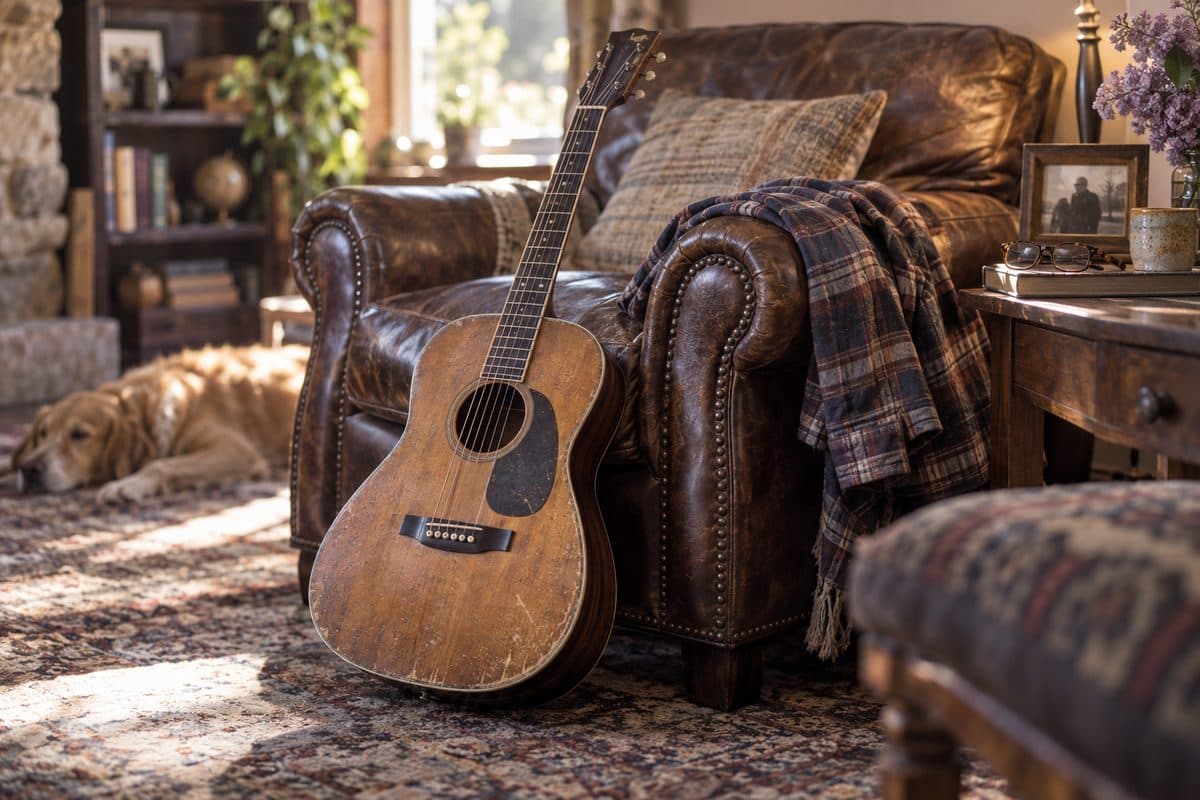 Songs for DadFuneral songs for Dad, from the hymns he sang to the country songs and old records he loved, with a line on why each fits. Listen, copy or put one in his video.
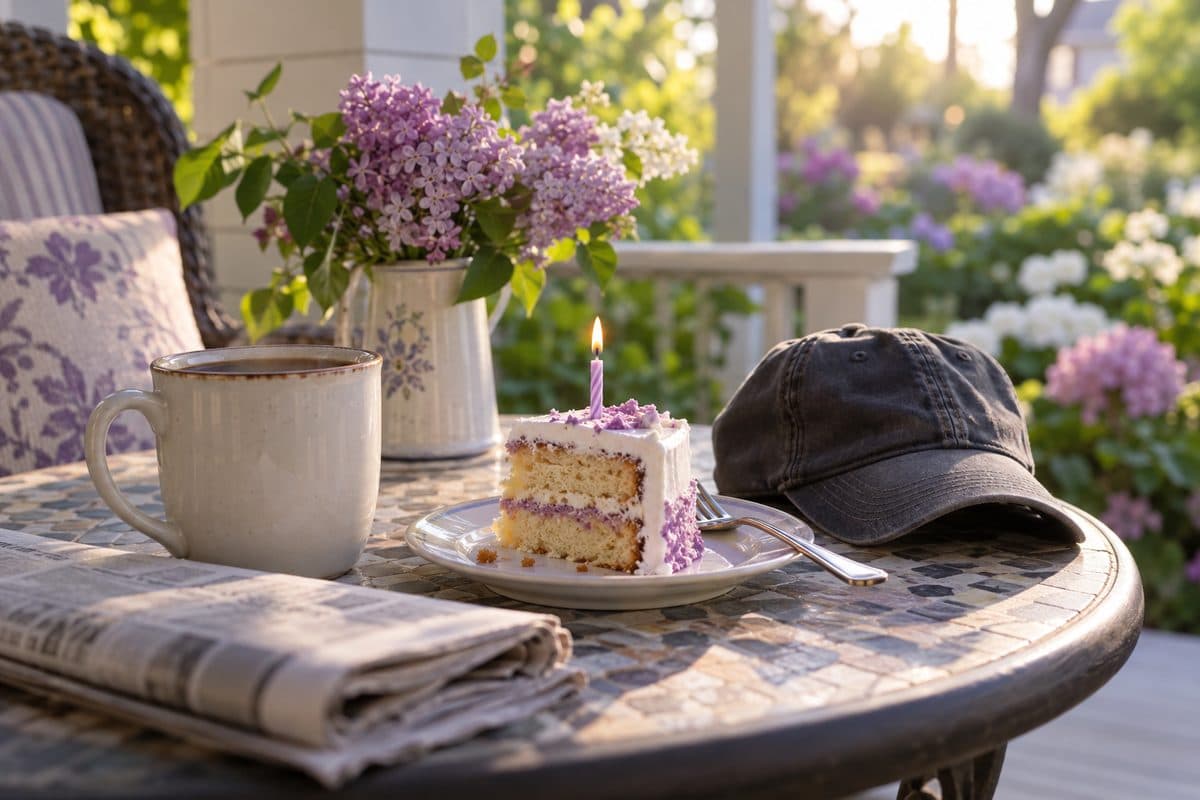 Dad's birthday in heavenBirthday messages for your dad in heaven, from a daughter or a son: short ones, words of faith, Facebook posts, his first birthday and ideas for the day.
 Poems and readingsFuneral poems to read at the service, each printed with its source: Remember, Crossing the Bar and more, for Mum or Dad, a partner or a soldier.
 Bible versesBible verses for a funeral, all in the King James Version: comfort in grief, heaven, verses for a mother or a father, and short ones for a program or slide.
 Funeral slideshow guideA step-by-step guide for families: gathering and scanning photos, putting them in order, music, closing words, free tools and playing it at the service.